A white wall that feels tiring, a living room where one no longer feels comfortable, a bedroom that lacks character: most desires for change stem from a specific irritant, not a decorative whim. Transforming your interior with trendy decor ideas doesn’t necessarily require major renovations. A few targeted interventions on colors, materials, or furniture arrangement are often enough to radically change the atmosphere of a room.
Dopamine decor: daring bright colors room by room
There’s a lot of talk about minimalism and neutral tones, but the trend gaining ground on social media and in real interiors is dopamine decor. The principle: introduce bold colors and playful objects to create a joyful, almost childlike atmosphere in an adult living space.
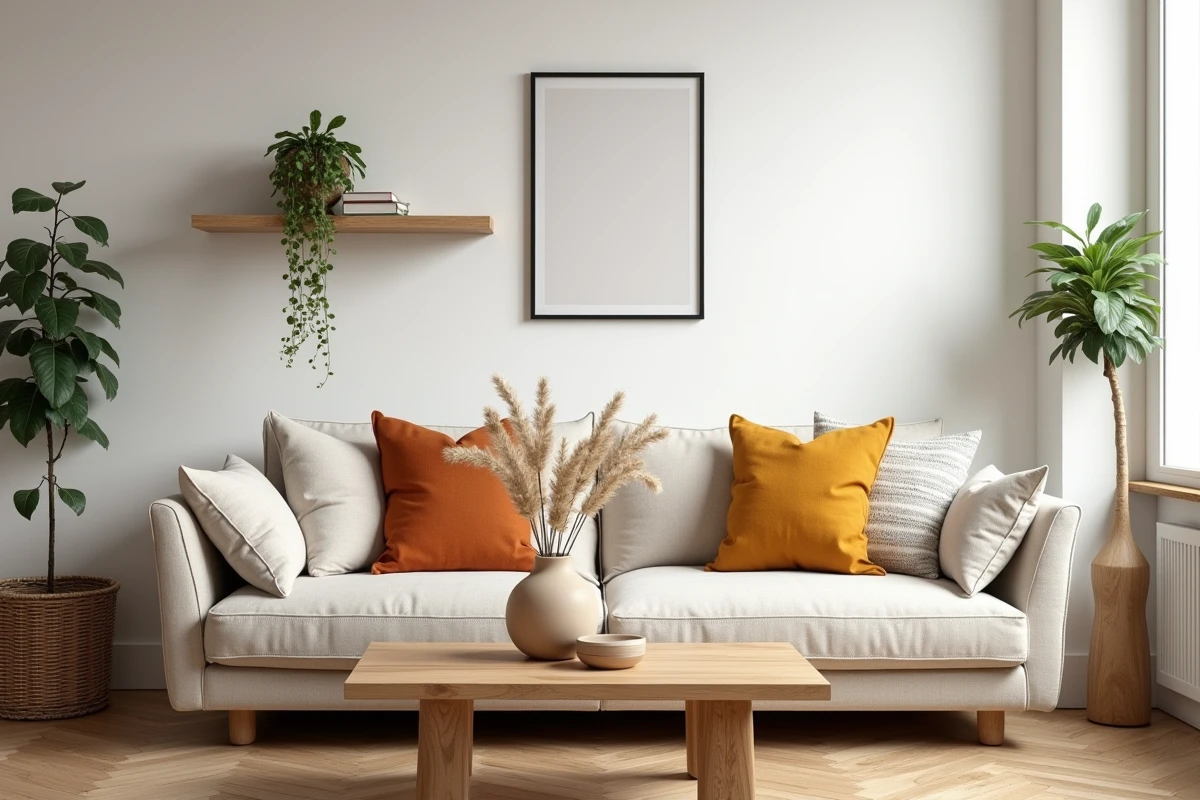
Specifically, we don’t repaint all the rooms in lemon yellow. We start with a specific area. A wall in the kitchen, a glossy red accent piece in the entryway, cushions in saturated hues on a neutral sofa. The joyful accumulation works when it remains localized: a reading nook, a desk, a windowsill adorned with colorful objects.
To delve deeper into this type of approach, you can find decor ideas on Blog du Bricoleur that detail accessible DIY projects, including those involving color.
Opinions vary on this point: some find dopamine decor tiring after a few months, while others experience it as a true lever for daily well-being. The key is to be able to revert easily. Favor removable accessories (textiles, frames, displayed dishes) rather than tiling or wallpapering an entire room.
Natural materials and wood: transforming the ambiance without a complete overhaul
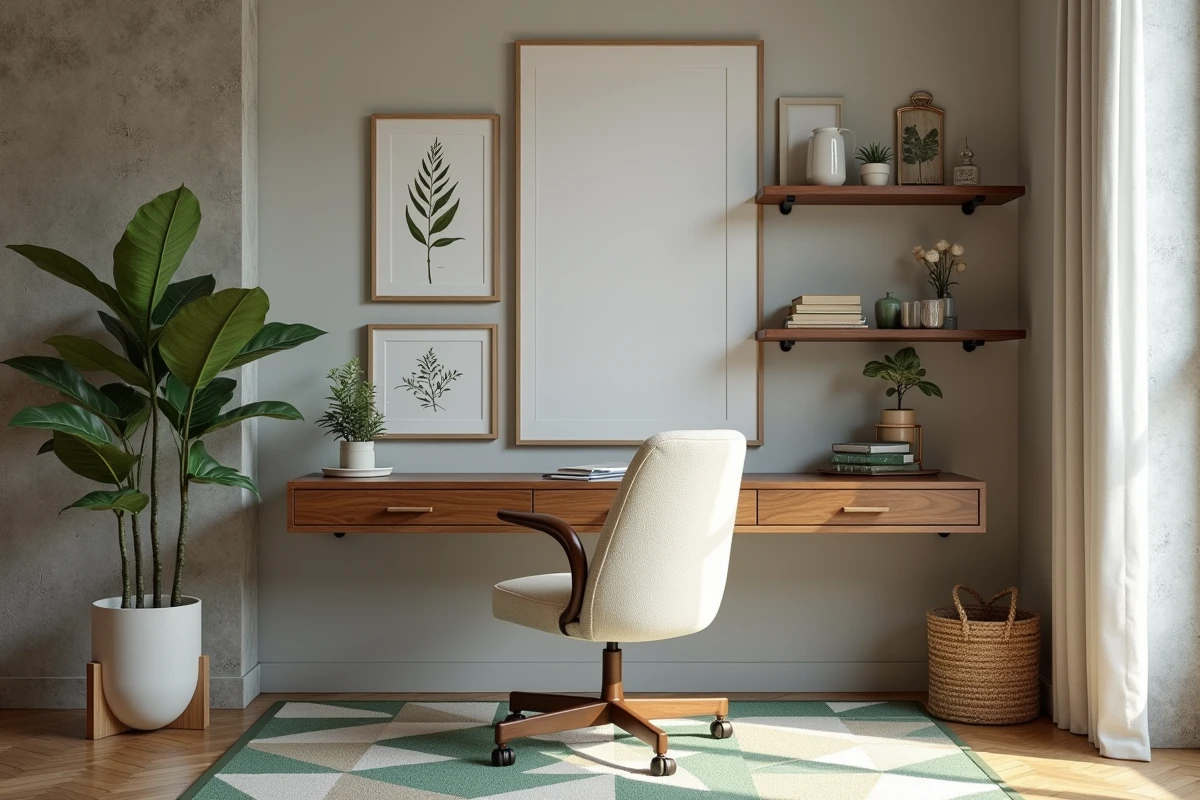
When you want to warm up a space that’s too cold or too smooth, wood remains the most effective material in decoration. There’s no need to install solid hardwood flooring: a raw oak shelf, a walnut table top, a mirror framed with driftwood already change the perception of a space.
Wood is often associated with Scandinavian style, but it works in all registers. With black metal, you shift towards an industrial look. With linen and terracotta, you achieve a Mediterranean ambiance. The practical tip: don’t coordinate everything. Mixing wood types (light oak and dark walnut in the same room) results in a livelier outcome than a catalog set.
Three materials to combine with wood
- Rattan or caning, as a headboard or on the doors of a sideboard, to add texture without visually weighing down the room
- Natural stone (travertine, veined marble) in small touches on a tray or under a vase, which anchors the decor
- Textiles made from natural fibers (jute, raw cotton, boucle wool) on the floor or as a throw on the sofa, to soften the rigid look of the furniture
However, avoid piling too many materials in a small space. In a studio, two dominant materials are sufficient.
Zone layout: rethinking space without buying new furniture
Before looking for new objects, you can often transform an interior by rearranging what you already have. Zoning involves dividing a room into distinct functions, even without partitions. A rug delineates a living area. A console placed perpendicular to the wall creates a visual separation between the kitchen and living room.
A common mistake: pushing all the furniture against the walls. By moving the sofa forward a few inches, you clear a passage behind it and create a sense of volume. In a bedroom, shifting the bed away from the center of the wall and placing an asymmetrical reading lamp gives the room immediate character.
Light and decoration: the most underestimated lever
Changing the lighting alters the ambiance more than a new piece of furniture. Replace a single ceiling light with two or three light sources distributed throughout the room: a table lamp near the sofa, a low pendant above the table, a LED strip behind a piece of furniture. Indirect light softens corners and makes any space more inviting.
For a trendy effect, exposed filament bulbs remain effective in an industrial or vintage style. Natural material lampshades (wicker, rice paper) work better in a soft, organic interior.
Wall decor and objects: the details that change the perception of a room
A blank wall in a living room or hallway is wasted decor space. A few quick interventions are enough to transform it:
- A collection of frames in various sizes, placed on the floor and then gradually fixed, for a gallery wall that evolves over time
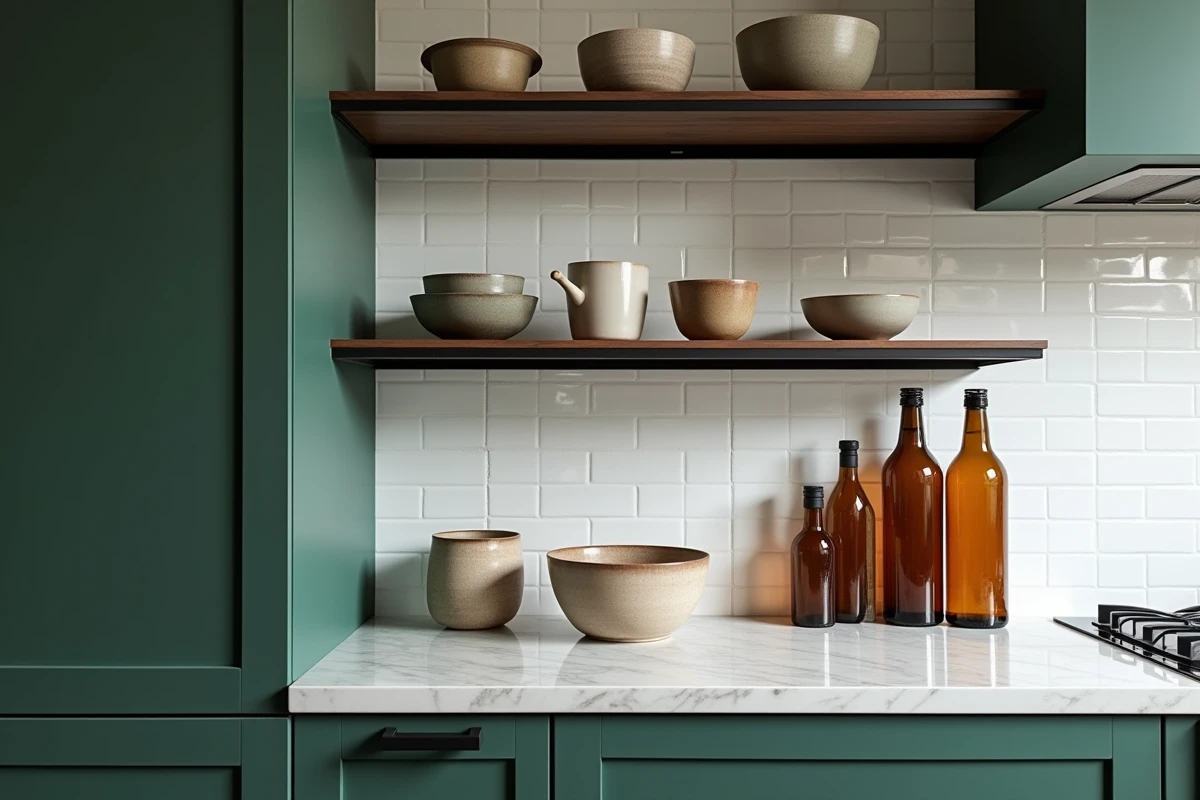
- Thin wall shelves on which to place books, plants, and small objects, rather than hanging everything
- A large mirror leaning against the wall (not hung), which visually enlarges the room and reflects natural light
- Panoramic wallpaper on a single wall, to create a focal point without saturating the space
Regarding objects, the current trend favors handmade or vintage pieces over identical series. A stoneware vase found at a flea market, a wooden sculpture, a local ceramic tells a story that mass-produced accessories do not.
Pop art wall decor, with its flat areas of bright colors and graphic shapes, works particularly well in an interior where the rest of the furniture is understated. A single painting or poster is enough to give character to the entire room.
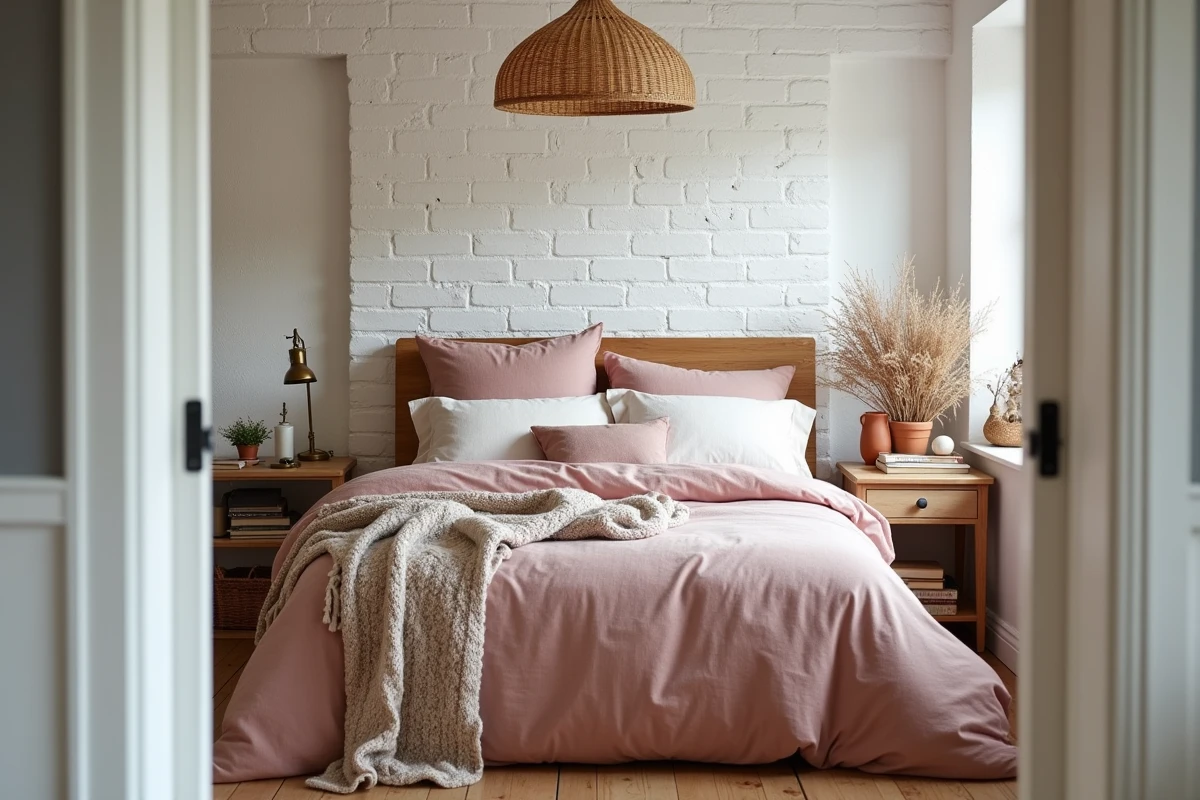
The common thread of all these trendy decor inspirations is that they start from what already exists in your home. A successful interior is not built in one order, but through successive adjustments: a color here, a material there, a moved piece of furniture, a repositioned light. The most striking transformations are often the least expensive.