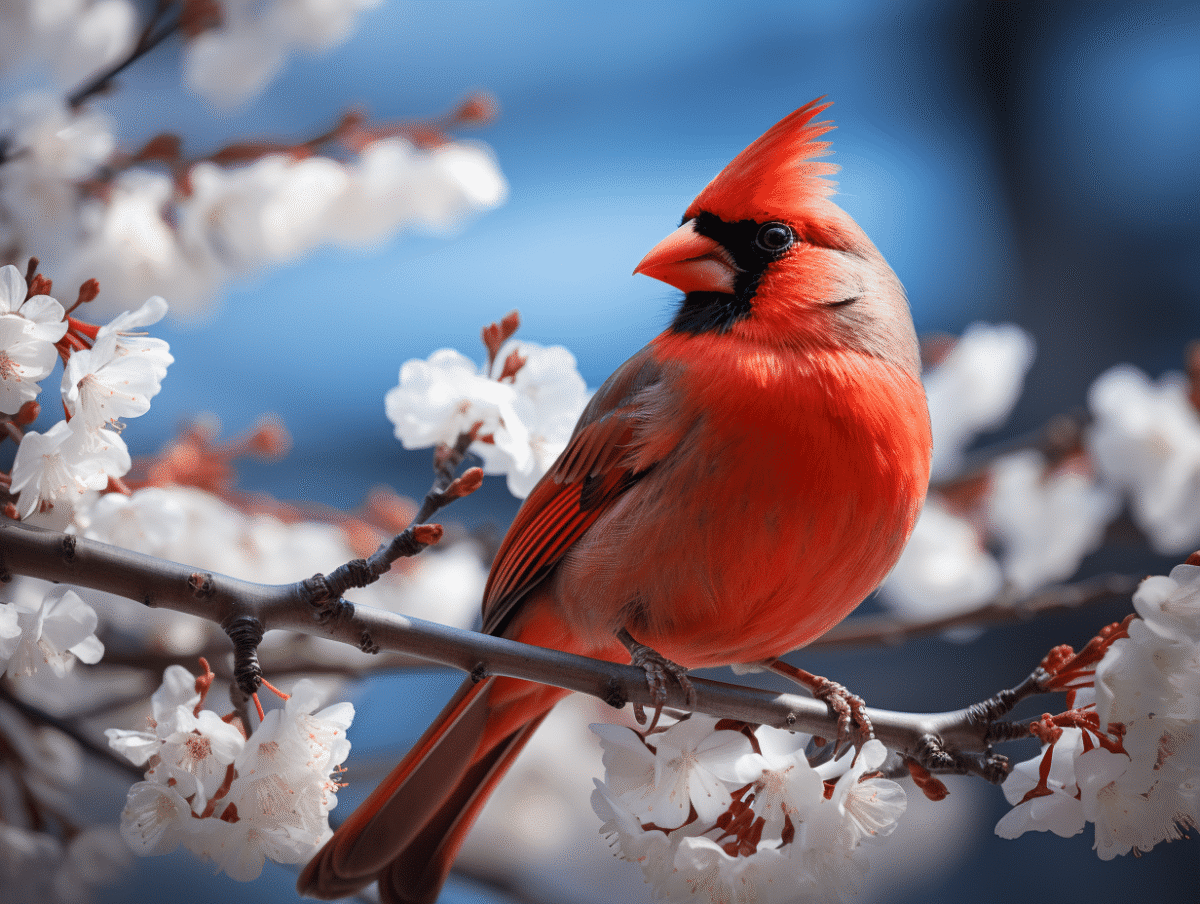
Ornithology, a branch of zoology dedicated to the study of birds, closely examines the identification and characteristics of avian species. Each bird displays distinctive features that facilitate its identification, such as plumage, song, behavior, and habitat. These characteristics are significant not only for scientists and bird enthusiasts but also play a key role in understanding ecological dynamics and biodiversity. Recognizing these distinctive traits helps to better protect birds by informing conservation efforts and raising public awareness of their ecological importance.
Morphological Characteristics and Bird Species Identification
Observing a black bird with an orange beak among the avian mosaic of our ecosystems is not trivial. It is an invitation to dive into the extraordinary diversity of shapes and silhouettes that the class Aves displays. Shaped by millions of years of evolution, each species exhibits a unique combination of feathers, tail, wings, and beak. From mallards to majestic peregrine falcons, the variety in size and shape is astonishing, ranging from the tiny Anna’s hummingbird to the African ostrich, showcasing the adaptability and diverse evolution within this class.
Color is a singular indicator, not only useful in the identification process but also in understanding the behavior and ecology of species. Feathers can serve to attract mates during courtship displays, camouflage in the environment to escape predators, or communicate social status within a group. For example, the differentiation in plumage between males and females, often more pronounced in males, is common among birds in Europe. These peculiarities are meticulously recorded by ornithologists, establishing a code of recognition that allows for the distinction of the 10,700 to 11,150 species of birds documented.
The structure of legs and wings, combined with the modes of flight, also provides valuable clues. A osprey, for example, is distinguished by its powerful talons adapted for catching fish, while a Cooper’s hawk reveals agility in flight that allows it to maneuver through dense forests. The identification of birds is nourished by these morphological details, which are the result of a long evolutionary lineage from theropod dinosaurs to modern neornithines. It is an exploration of the naturalist library of life, where each species holds its own chapter in the great book of biodiversity.

Behaviors and Communication: Clues for Recognizing Species
Through the vast horizons that ornithology deciphers, the behavior of birds proves to be a key vector in the quest for species identification. Take corvids, for example, whose cognitive abilities endow them with a knack for using tools, or parrots, which share this ability and are distinguished by a complex avian language. These behaviors, closely linked to advanced intelligence, offer observers essential distinctive traits to discern species within the class of Aves.
Careful observation of courtship rituals, hunting strategies, and social interactions enriches the understanding of avian communication. Passerines, making up more than half of bird species, perfectly illustrate behavioral diversity. Their ability to modulate complex songs contributes not only to attracting mates but also to delineating territories and exchanging vital information within their communities.
Consider that adaptation to various environments significantly influences the physiology and anatomy of birds, reflecting in their behaviors. The cosmopolitan presence of birds across the globe attests to this adaptability, whether it is the migratory flight of the Canada goose or the fishing techniques of the osprey. Studying these practices is a window into the evolutionary history of species, a story that began millions of years ago and has been meticulously documented by ornithologists since Linnaeus in 1758.