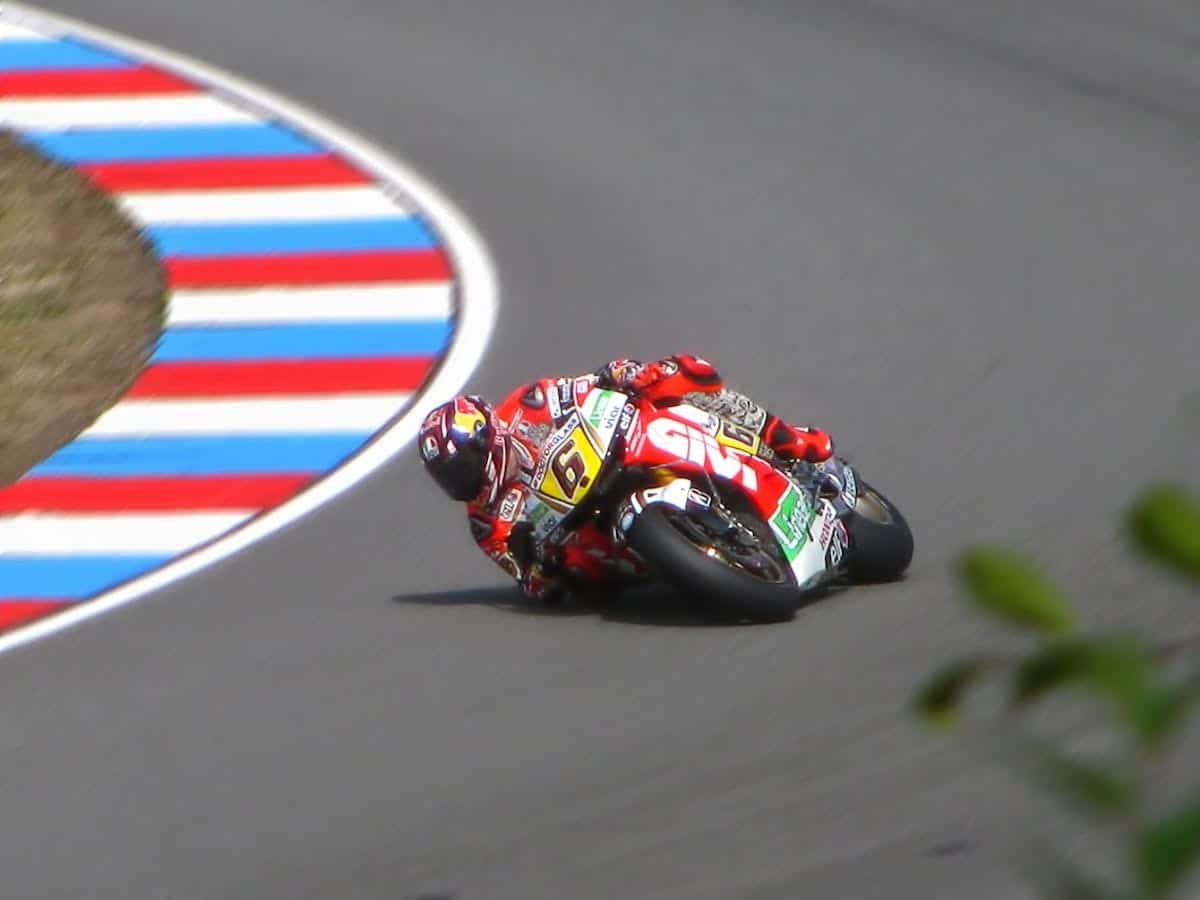
The world of MotoGP is a universe where every detail matters, where the slightest ounce can make the difference between success and failure. Among these details, one of the most crucial is the weight of the racing motorcycles. The limits on vehicle weight, which may seem arbitrary to the casual observer, are actually the result of a delicate balance between safety, performance, and cost. Teams and engineers spend months modifying and adjusting the bikes to meet these limits while maximizing their performance on the track.
The evolution of racing motorcycles in MotoGP: a story of performance
When it comes to performance in MotoGP, the ‘bike weight’ is a determining factor that should not be overlooked. The weight of racing motorcycles is influenced by various parameters that teams integrate to refine their vehicles and make them as performant as possible on the track.
The first aspect to consider when evaluating the ‘bike weight’ is undeniably the chassis. It is the backbone of every machine, and its optimization has a direct impact on the total weight. Professionals often use materials like titanium or high-strength aluminum, which offer an excellent strength-to-weight ratio while ensuring the structural rigidity necessary for intense riding.
Next comes the engine, a crucial element in the quest for the ideal ‘bike weight.’ Its configuration must also take weight into account. The use of composite materials comes into play here: they are lightweight yet very strong, giving them a privileged place not only in the construction of the chassis but also in the engines.
However, it would be erroneous to limit our analysis of the calculation of ‘bike weight’ solely to these two key elements, as other components also add to the total weight: suspension, braking, and embedded electronic systems included! Each must be meticulously selected according to its utility/weight ratio to ensure maximum performance without unnecessarily burdening the machine.
Even though all these techniques aim to drastically minimize the ‘bike weight,’ let us remember that strict regulations exist to ensure safety and equality among competitors during official MotoGP races. A regulatory minimum imposing a ‘total minimum weight including the rider’ prevents any tendency toward a frantic (and potentially dangerous) pursuit of absolute lightness.
Effectively reducing the ‘bike weight’ thus requires a careful balance between technical requirements in the strict sense and safety imperatives; this, combined with the constant technological fluctuations created by a permanent challenge for the teams involved in this demanding sport.
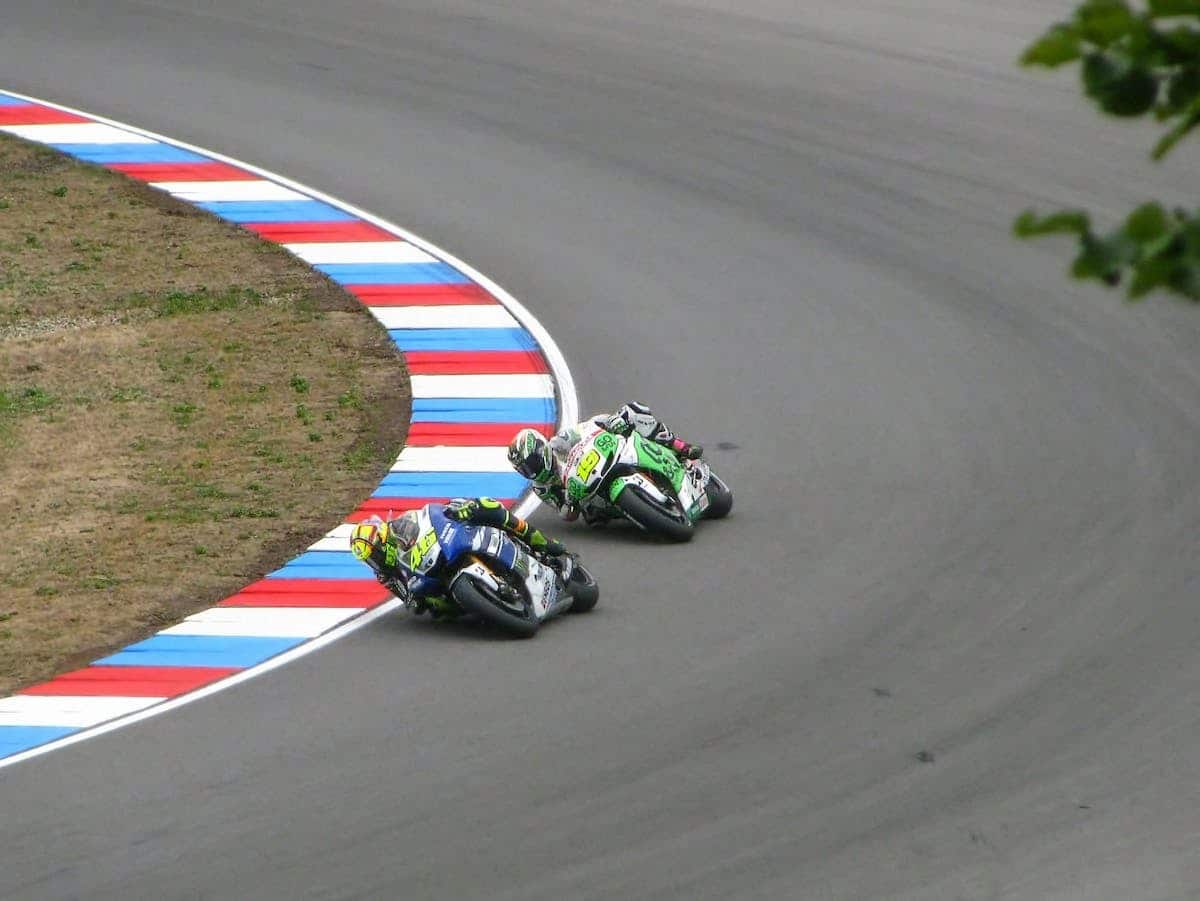
Weight of motorcycles in MotoGP: what factors make the difference
Let us continue our exploration of the innovative techniques used by teams in MotoGP to reduce the weight of their motorcycles. Among the major technological advances is the use of composite materials at the forefront of research.
Composite materials are made up of a combination of fibers and a matrix that holds them together. They offer exceptional strength while being incredibly lightweight. These properties make them ideal candidates for lightening the weight of motorcycles in MotoGP.
In the constant quest for optimal performance, engineers have developed sophisticated methods to integrate these composite materials into the construction of various parts of the motorcycle. For example, they can be used in the manufacturing of the fairing, which is not only responsible for aerodynamics but also for the total weight of the machine.
In addition to the fairing, these materials are also used in other key components such as the fuel tank and wheels. Their use allows for a significant reduction in overall weight without compromising structural integrity or sacrificing desired performance.
Another important technological innovation is the increasing use of embedded electronic systems to manage different aspects of the motorcycle’s operation. Smart sensors and calculators are now ubiquitous and play an essential role in optimizing dynamic and safety behavior during races.
Even though these electronic systems invariably add some weight to the machine, the benefits they bring in terms of control and efficiency far outweigh this drawback. Thanks to them, riders can precisely adjust their motorcycle’s behavior according to the specific conditions of each circuit.
We cannot overlook the intelligent use of advanced computing to design and simulate virtual models to optimize weight distribution on the motorcycle. These simulations allow engineers to experiment with different configurations without the need to physically build multiple prototypes. This results in a considerable time saving while ensuring an optimal final result.
The teams engaged in MotoGP are constantly pushed to innovate to reduce the weight of their motorcycles in order to improve track performance. Composite materials, embedded electronic systems, and the use of computing are all innovations that contribute to this ongoing process of lightening the machines.
Lightweight motorcycles in MotoGP: advantages and limits for competition
Now let us analyze the advantages and limits of a lightweight motorcycle in MotoGP competition. It is undeniable that the dominant characteristic of a lightweight motorcycle lies in its increased maneuverability. Thanks to its reduced weight, such a motorcycle can move with remarkable agility on the track, allowing riders to negotiate tight turns and rapid direction changes with ease.
However, it is important to highlight certain constraints associated with this lightness. Indeed, a featherweight can make riding unstable at high speeds. A motorcycle that is too light may be more sensitive to wind movements or any external impact, which could compromise the rider’s stability and potentially lead to serious accidents.
Another key aspect to consider is the impact of weight on the overall performance of the motorcycle. While a lightweight machine may benefit from better acceleration and a quicker response time due to its low inertia, it can sometimes be disadvantaged when it comes to maintaining a constant speed or when facing unfavorable weather conditions such as strong winds or heavy rain.
The choice of optimal weight for a racing motorcycle also depends on many other technical factors such as the engine used and its specific torque. A subtle balance between engine power and power-to-weight ratio must be achieved to optimize the overall performance of the motorcycle.
Although opting for a lightweight motorcycle can offer significant advantages in terms of maneuverability and acceleration, it is essential to find a wise compromise between reduced weight and stability. The ultimate goal is to provide riders with a machine that performs well in all situations encountered on the track.