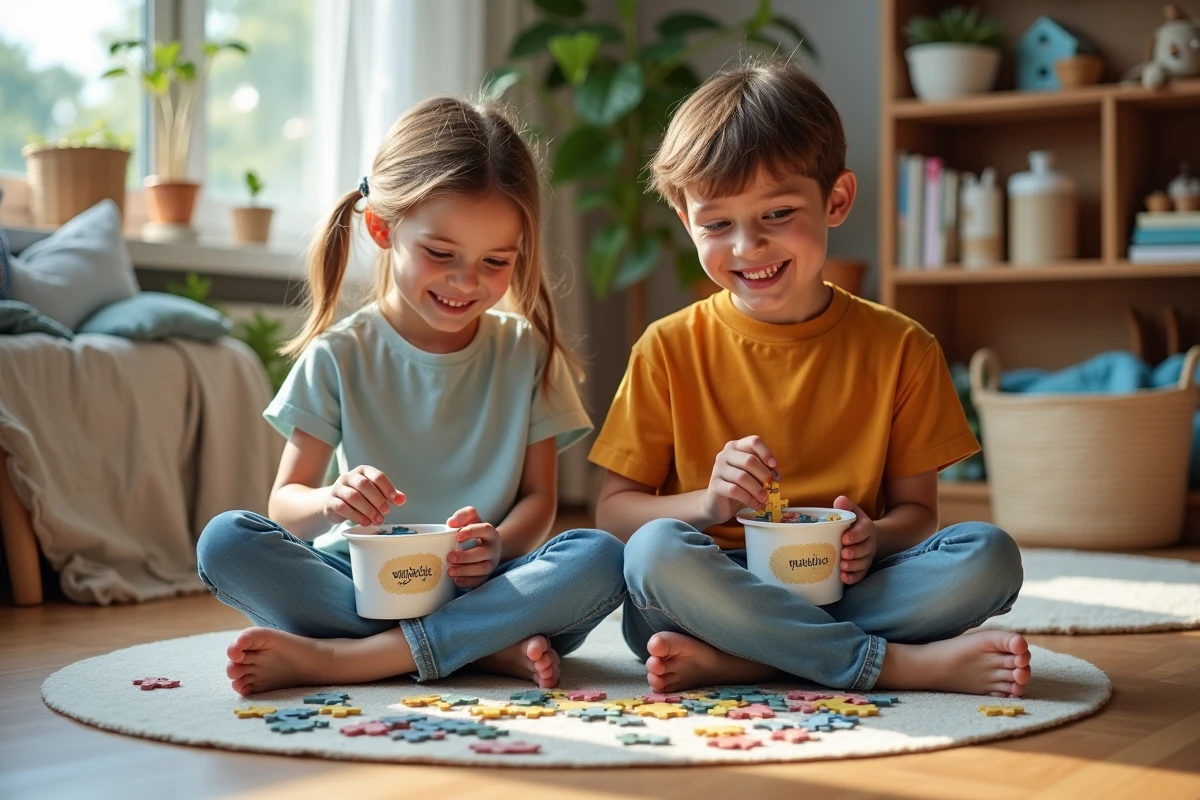
The loss of a single piece renders the entire puzzle unusable, regardless of the size of the puzzle. Entire families of puzzles sometimes pile up in a closet without ever being completed a second time. The original boxes, often too bulky or damaged, complicate storage and regular access.
Solutions exist to avoid disorganized accumulation, limit breakage, and preserve the integrity of each game. A few adjustments are often enough to transform daily management and restore value to these activities, without requiring significant investment or additional space.
Why do children’s puzzles often end up in disarray?
Hand a puzzle to a child, and the mess won’t take long to appear. The colorful pieces get mixed up, the battered boxes suffer the test of time, and soon, finding each piece becomes an achievement. A simple distraction, and there goes a piece slipped under a piece of furniture or lost in another box. Little by little, confusion sets in.
As different-sized puzzles accumulate, management becomes a challenge. The packaging doesn’t hold up well to daily handling, especially in the enthusiastic hands of younger ones, and the absence of clear markers turns storage into a puzzle itself.
Several factors can easily be pointed out as the cause of this disorder:
- Puzzle pieces switch from one model to another without warning, their deceptive similarity doesn’t help.
- The original packaging wears out, tears, or cracks quickly, especially if the game circulates among siblings.
- Without a system to sort or identify, everything eventually gets mixed up: it’s impossible to keep track over time.
Rather than resigning to this disorganization, other families have adopted tricks that make a difference. To tap into this pool of good practices, you will find ideas on Astuces Parents and ways to refresh the storage routine. With a few adjustments, these games regain their place and appeal at home.
Clever and fun ideas to organize and display puzzles at home
Storing children’s puzzles is much more than a matter of practicality: it’s also about preserving the longevity of the game and making the activity spontaneous for everyone. The possibilities are numerous, and suitable accessories can transform the puzzle corner.
It’s better to forget worn boxes and invest in sturdy options: airtight boxes or transparent zippered pouches effectively protect against dust and moisture. For maximum space-saving, consider modular storage bins that can slide into a drawer or be stacked on a shelf. Organization takes on a new dimension with clearly visible labels: puzzle name, miniature illustration, number of pieces… A simple method that avoids a lot of fumbling.
Here are a few concepts to easily adopt in daily life:
- Use a sorting tray to organize pieces by patterns or colors, which speeds up construction and lightens handling.
- The puzzle mat allows you to roll up a started game to move everything without losing track, ideal when space is tight.
- Once the puzzle is completed, place it on a rigid support, lightweight wood or cardboard, to preserve or showcase it.
Proudly display the assembled puzzles: a frame with anti-reflective protection enhances favorite works, and a sticky sheet allows you to fix a creation without damaging the pieces. With a camera, catalog in hand, it becomes easy to track the growth of the collection and stimulate the pride of young builders. Taking care of storage also means choosing a dry place, away from sunlight, so that colors and materials don’t deteriorate prematurely.
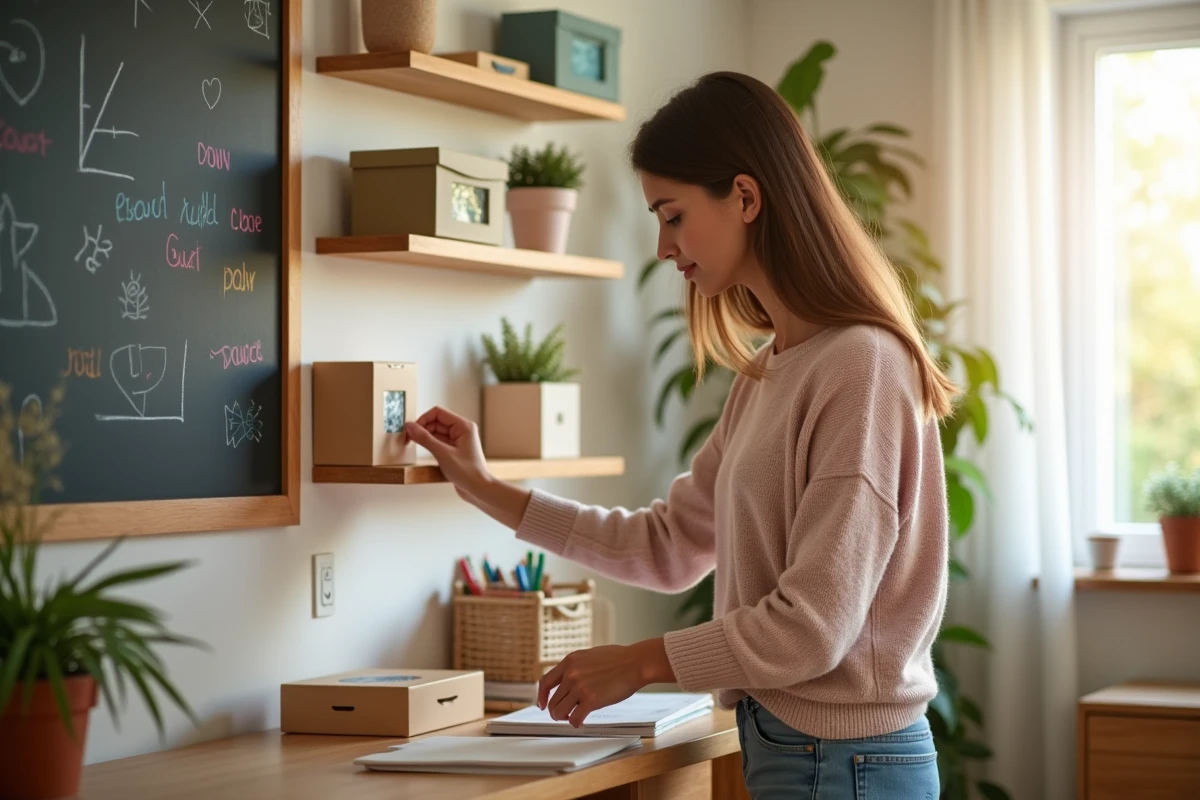
How to involve your children in organizing to make it a creative and friendly moment
When children participate in organizing, the exercise takes on a different tone. Gone is the chore: we share, we invent, we personalize the play area together.
Start a homemade label workshop: colored papers, markers, stamps… Invite each child to name their puzzles, to imagine a pattern, or to draw their favorite animal from the last completed game. This simple workshop sparks creativity and encourages keeping their box in good condition.
Vary the activities with a sorting workshop: gather pieces by shapes, sought-after patterns, or colors, all in the form of a small collective challenge. Depending on the mood, establish a ritual appreciating each completed puzzle or decide to display the most significant ones throughout the house, nothing like it to stimulate pride!
Here are a few simple ideas to motivate the group and make organizing smoother:
- Assign each child a specific compartment or a mini-collection to manage, which nurtures personal engagement.
- Gather children’s suggestions to decorate boxes or supports, or to reorganize shelves according to their logic.
- Rotate roles: each takes turns sorting, sticking, labeling, or setting up the new puzzle to display.
When everyone invests in their own way, the entire play area gains harmony, and organizing becomes almost intuitive. This family organization mode also cultivates autonomy… and multiplies good memories around simple activities. Adapt according to ages, personality, and the rhythm of your household: there is no one-size-fits-all scheme, the art lies in building a system where everyone feels included.
A well-organized puzzle is the promise that the next play session will happen without fuss, without an endless hunt for the missing piece, and with the pleasure of watching each collection grow and endure through the years.