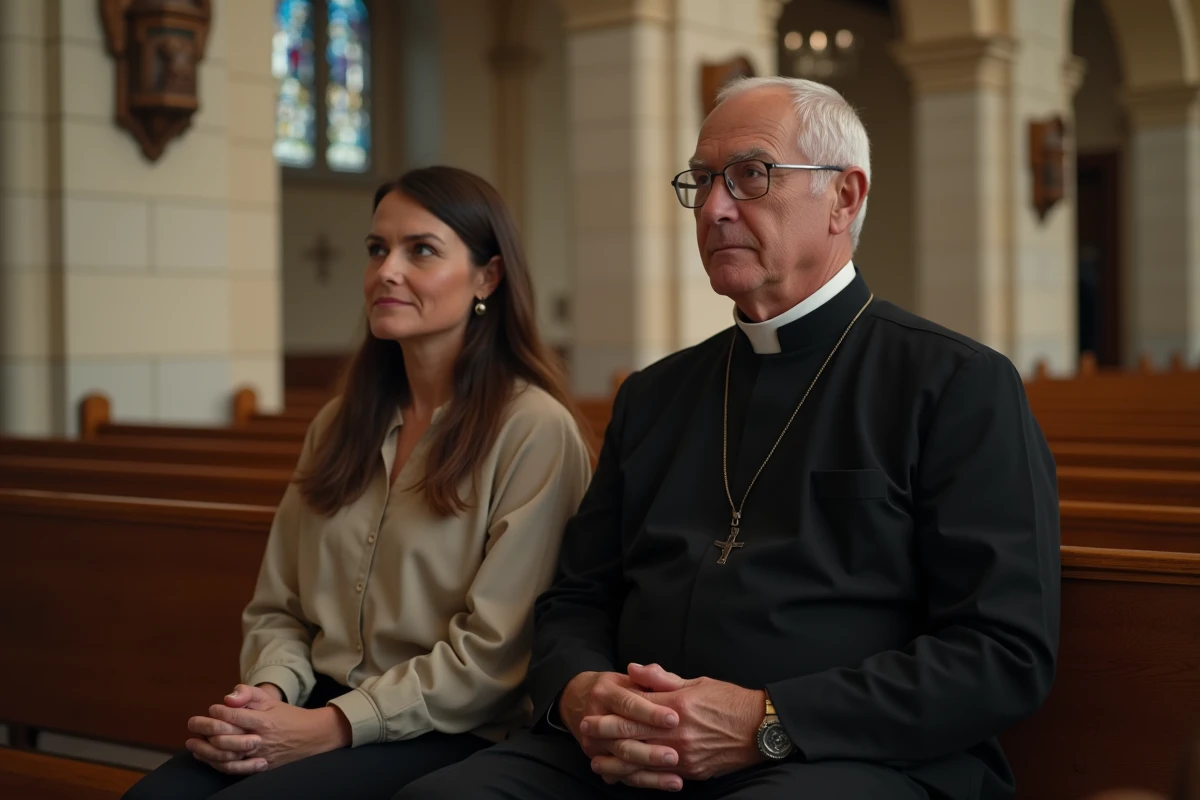
The figure is unequivocal: every year, dozens of Catholics fall in love with a priest. The ecclesiastical celibacy, meant to be a safeguard, allows human flaws, sincere impulses, and often unspoken feelings to slip through. This paradox, discreet yet very real, shakes the foundations of an institution convinced it can master hearts. Some Eastern Churches united with Rome allow priests to marry before ordination, creating an unknown disparity within Catholicism itself. This coexistence of rules and exceptions fuels debates and questions about the place of feelings, religious discipline, and the human consequences of priestly life choices.
Love versus religious vocation: a human and spiritual dilemma
Catherine’s journey speaks volumes about the reality of these forbidden feelings. For two years, she has been in a secret relationship with Father XYZ. Their story, born during a parish meeting, has never crossed the boundary into the platonic. But the warmth of confidences, the weight of silences, all weave a strong bond, difficult to define, impossible to deny. One day, when her own faith was wavering, this encounter turned her daily life upside down.
The question then arises, stark: Is it possible to love a priest and how far can one go? Catherine and Father XYZ navigate a fine line between human attachment and religious commitment. The slightest proximity becomes a source of introspection, every gesture counts double.
For Father XYZ, the balance is precarious. His ministry ties him to his vocation: serving God, accompanying his community. But his feelings for Catherine, discreet yet vivid, crack his certainties. He spends his nights seeking answers in prayer, measuring the distance between the letter of the rule and the tumult of the heart. The tearing between desire and renunciation forges a silent wound, never truly healed.
Catherine, for her part, does not indulge in illusions. She is careful to protect the priest’s anonymity, refusing to place him in an impossible choice. Their relationship, devoid of physical contact, confronts her with her own limits. Several times, she has considered upending her life, selling her house, changing jobs, all to get closer to him, without ever crossing the red line set by the Church. She wonders: does God, creator of desire and attachment, really reject this impulse of the heart? The choice of life charts a solitary path, marked by lack and fidelity to commitments made.
Her story presses where it hurts: are we ready to sacrifice our desires on the altar of principles? Where does loyalty end, where does betrayal begin? In the face of the strength of attachment, the question embeds itself and does not let go: loving a priest, is it condemning oneself to silence?
What limits do the Church and society impose on relationships between priests and the faithful?
The Catholic Church has built its discipline on a demanding foundation: the celibacy of priests of the Latin rite. It is impossible to overlook: distance must protect the priest from the confusion of feelings and ensure the coherence of his commitment. Yet, exceptions exist. Thus, some Maronite branches allow men to marry before ordination, revealing the diversity of practices within Catholicism.
The daily life of Western parishes is quite different. Here, the priest must remain apart, dedicated to God and the community. For Father XYZ, the mere idea of a romantic relationship triggers an alarm: crossing the line exposes him to a break with the Church, loss of trust from the faithful, and canonical sanction. As for society, it observes any deviation with a persistent suspicion. A priest in love is the symbol of a double life, a barely veiled transgression. The man of the Church remains a moral reference: any intimate adventure immediately takes on the airs of a scandal.
For parishioners, the markers sometimes blur. Proximity to the priest, trust, shared vulnerability open the door to gray areas. Catherine, engaged in parish life, knows the weight of others’ gazes. Gestures, exchanges, everything can be interpreted. The Church does not prohibit affection, but it disapproves of exclusive attachment: anything that diverts the priest from his mission and jeopardizes the group’s balance is frowned upon.

Testimonies and reflections: when feelings disrupt certainties
Catherine’s testimony, 42, illustrates the complexity of these stories. For two years, she has loved Father XYZ, never publicly claiming it. Their platonic relationship is built on silences, restrained gestures, words exchanged away from prying eyes. The heart beats, the body remains at a distance. But nothing erases the strength of attachment.
Here are some elements that punctuate Catherine’s daily life:
- Meetings and messages where every word counts, weighed and reweighed
- Discreet comings and goings, scrutinized by parishioners, which eventually awaken suspicions
- The impossibility for her to ask the priest to choose between his religious commitment and their bond
- An intact respect for the habit, the collar, the mission of Father XYZ
Catherine’s life sometimes resembles that of those wives of businessmen: waiting, adapting, coping with absence, uncertainty, and solitude imposed by the situation. She never pits faith against her feelings. She demands nothing, sets no conditions, but the pain of secrecy catches up with her. She sees in him a complete man, torn between religious vocation and sincere attachment.
Her reflection goes deep: how far should love be silenced? Where is the boundary between spiritual attachment and human impulse? This tugging shakes certainties and invites everyone to re-examine their markers. At a time when rule and feeling clash, life offers no simple answers. And the insidious question remains: what becomes of a heart that loves when it is not allowed to say so?