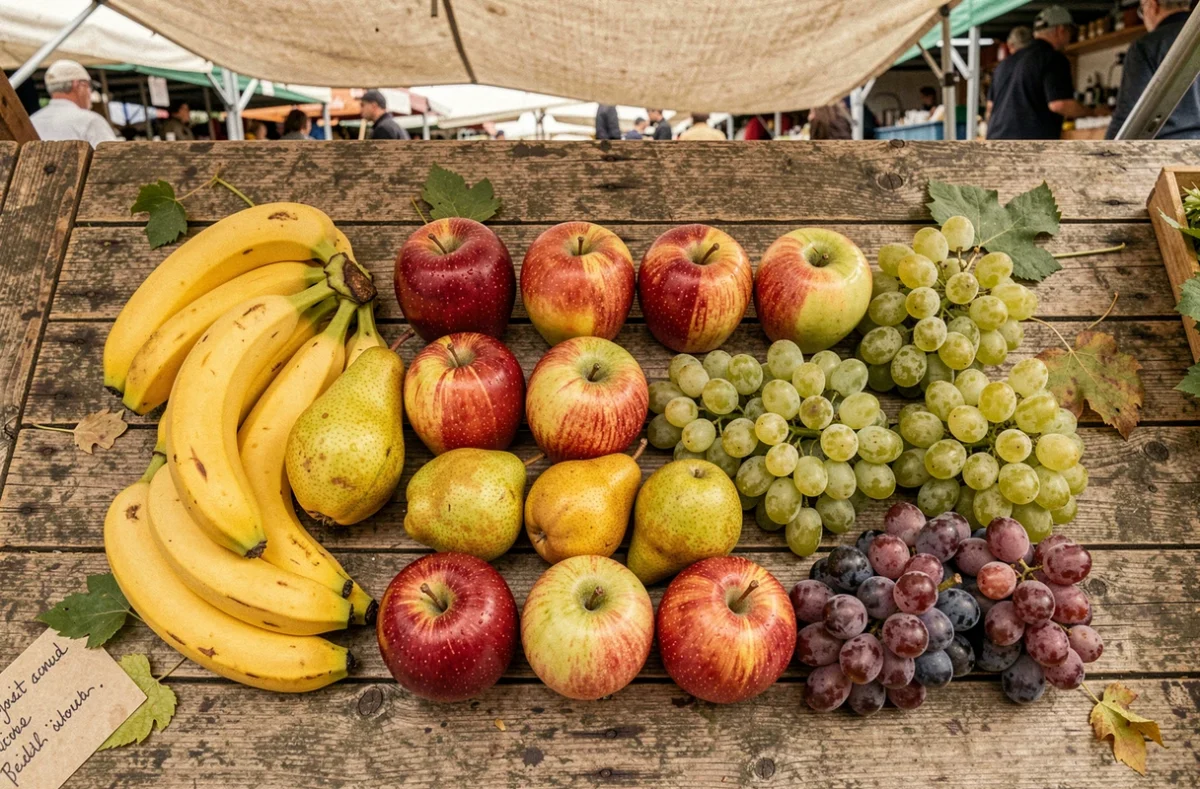
In the fruit aisle, we often pick up a banana out of habit or a bunch of grapes because they look tempting, without giving much thought to calories. The difference between these four everyday fruits (banana, apple, pear and grapes) may seem trivial. It matters more when you look at the figures for a realistic serving rather than per 100 grams.
Calories per 100 g and per whole fruit: two different rankings
The Anses Ciqual 2025 food composition table lists values per 100 g of raw flesh: around 50 kcal for pear, 54 for apple, 71 for grapes and 88 for banana. At the same weight, pear and apple vie for first place, well ahead of grapes and especially banana.
You could leave it at that. The problem is that we don’t eat 100 g of each fruit every day. An average apple weighs more than an average banana once peeled. According to USDA FoodData Central data (SR Legacy, April 2018), an average apple provides around 95 kcal, a pear 101, a banana 105 and a typical serving of grapes (about one cup) 104 kcal.
In other words, the gap between the rankings narrows considerably when you compare servings. The difference between an apple and a banana drops to around ten kilocalories—the equivalent of a sip of orange juice. For a precise breakdown of how many calories are in a banana depending on its size, detailed nutrition tables remain the most reliable reference.

Apple, pear, banana and grapes: what matters beyond calories
Reducing a fruit to its calorie count is like judging a car by its color alone. Its nutritional value also depends on its fiber, sugar and micronutrient content.
Fiber and everyday satiety
Apples and pears eaten with their skin provide more fiber than bananas or grapes in a comparable serving. This fiber slows digestion and helps you feel full for longer—a factor that is often more useful than simply counting calories when you’re trying to manage your appetite throughout the day.
Sugar and glycemic index
Grapes contain more simple sugars (glucose and fructose) per bite than the other three fruits. As a banana ripens, its starch turns into sugar, raising its glycemic index over time. A banana that is still slightly green contains less sugar than one with lots of brown spots, a small detail that can make a real difference to its nutritional content.
Apples and pears, with their fiber and higher water content, cause blood sugar to rise more gradually. You may notice the difference when having a mid-morning snack.
Fruit varieties and differences between figures
The Ciqual table sometimes distinguishes between varieties, and its figures are averages. A Granny Smith does not have exactly the same nutritional profile as a Golden Delicious. Differences between varieties and databases do exist, which explains why figures can vary slightly from one source to another. Treat these numbers as guidelines, not absolute values accurate to the nearest kilocalorie.
Raisins and fruit juice: why they’re not equivalent to fresh fruit
When comparing the calories in these four fruits, we’re talking about whole, fresh fruit. Juicing or drying it changes things considerably.
- A glass of grape or apple juice contains the fruit’s sugars without the fiber that slows their absorption. You can drink the calorie equivalent of several pieces of fruit in just a few sips, without feeling as full.
- Raisins lose their water but retain all their sugars. A handful of raisins contains far more calories than a bunch of fresh grapes of the same volume because dehydration increases their energy density.
- Apple or pear purée, even with no added sugar, contains less fiber than the whole fruit eaten with its skin and is consumed more quickly, reducing the physical feeling of fullness.
This distinction is not a minor one. Replacing fresh fruit with juice changes both the blood sugar response and the meal’s actual calorie content, even if the label lists the same ingredient.
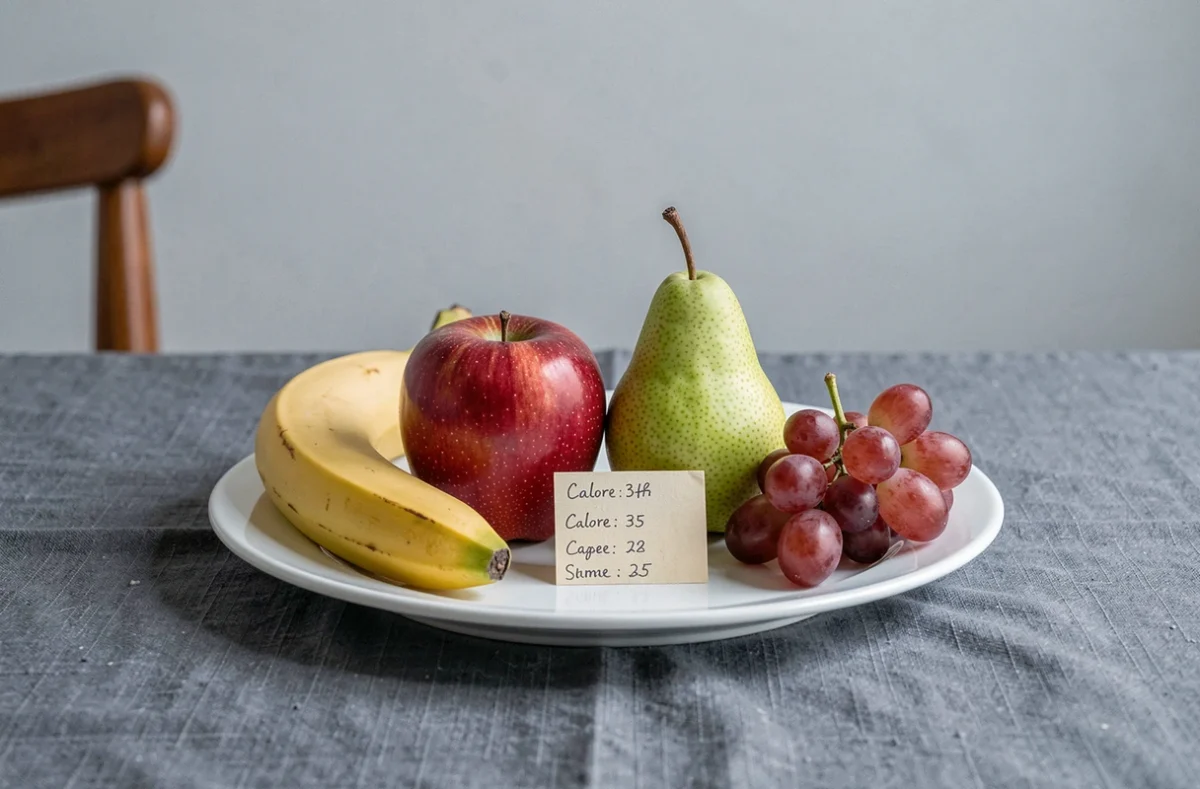
Which fruit to choose at different times of day
Rather than looking for the “lowest-calorie” fruit in absolute terms, it makes more sense to choose according to the situation.
- Before exercise, a banana is still the most practical choice: its energy is quickly available, it’s easy to carry without a container and it won’t leak in your bag.
- As an office snack, an apple or pear with the skin on keeps you feeling full for longer, thanks to its fiber and the extra chewing it requires.
- Fresh grapes work well in small portions at the end of a meal when you want something sweet without opening a packaged dessert.
- To keep your overall calorie intake down, pears and apples remain the lightest options, whether you compare them per 100 g or per whole fruit.
The calorie difference between these four fruits never exceeds around ten kilocalories per serving. The real difference comes down to how you eat the fruit: whole, juiced, dried or puréed, the calorie count can vary considerably. Choosing fresh fruit, with the skin on when possible, is the simplest way to keep calories low and fiber high.