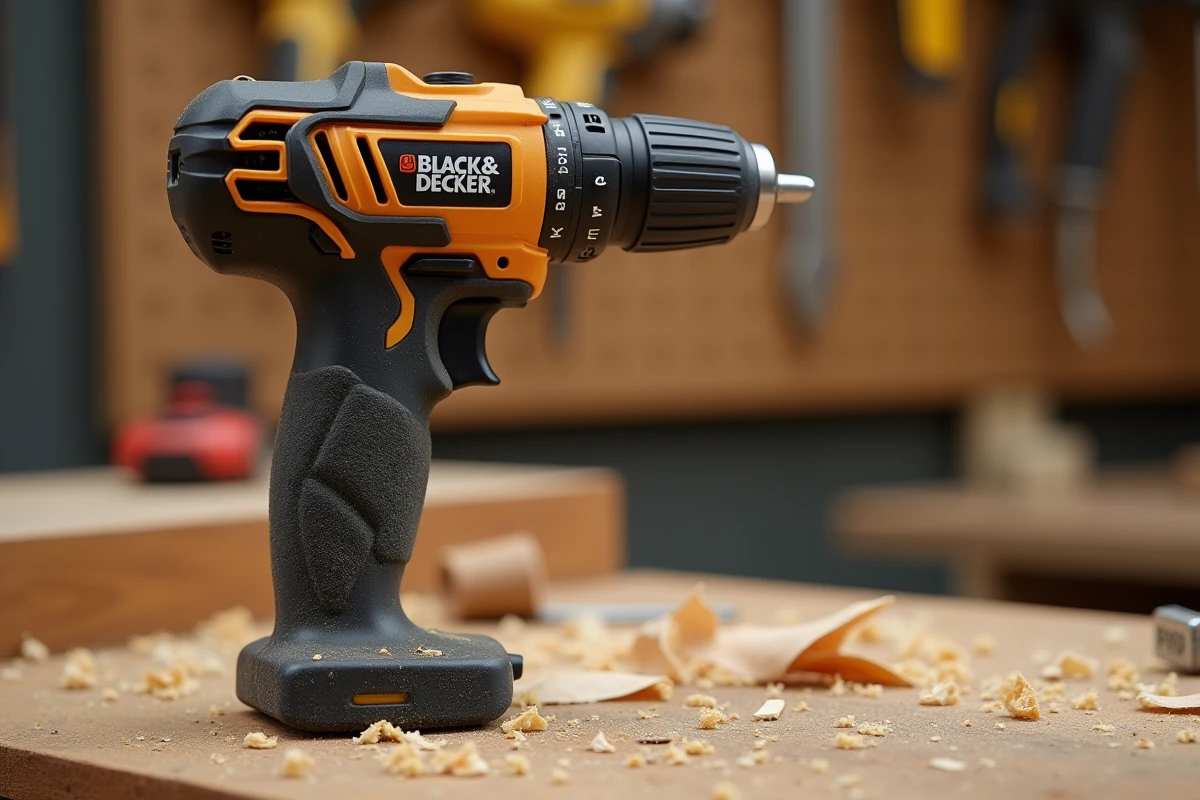
The Black & Decker CD601 is no longer sold new by major retailers. Castorama explicitly states that the item is no longer available for sale. So what should one do with a corded circular saw that still has a solid reputation, but whose commercial status has changed? This article assesses what the CD601 is truly worth in the second-hand market compared to current entry-level saws.
CD601 in second-hand market vs. new circular saws: the comparison
The table below contrasts the known characteristics of the CD601 with the current benchmarks of entry-level circular saws available new.
| Criterion | Black & Decker CD601 (used) | New entry-level (current benchmarks) |
|---|---|---|
| Power | 1100 W | 1200 to 1400 W |
| No-load speed | 5000 rpm | 4500 to 5500 rpm |
| Cutting depth at 90° | 55 mm | 55 to 66 mm |
| Cutting depth at 45° | 42 mm | 40 to 48 mm |
| Blade diameter | 170 mm | 165 to 190 mm |
| Cable length | 2 m | 2 to 3 m |
| Availability new | Withdrawn from sale | In stock |
| Spare parts | Carbon brushes still referenced | Active manufacturer support |
The CD601 displays characteristics consistent with entry-level models without exceeding them. Its power of 1100 W remains in the lower range of current models, which often start a notch above.
On the other hand, its no-load speed of 5000 rpm positions it in the average range. For straight cuts in softwood or particle board, the gap in raw performance is marginal.
Reliability and spare parts for the CD601 in 2025
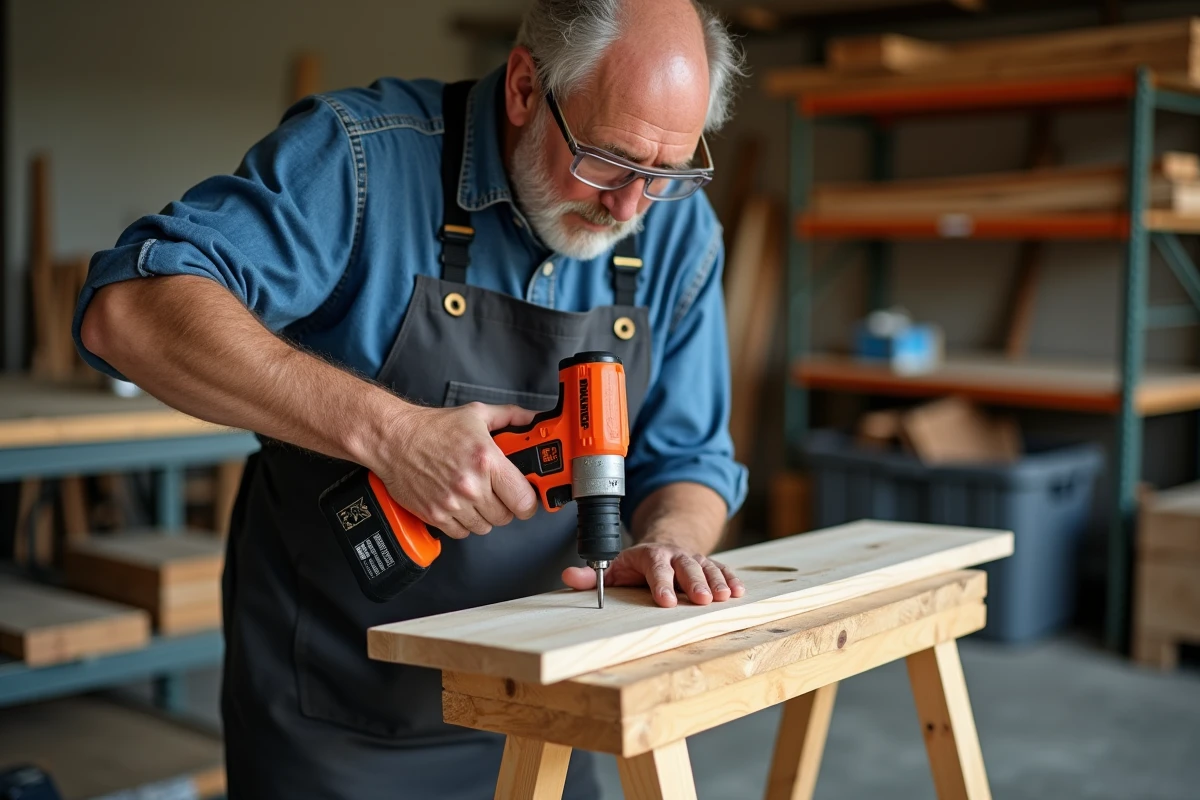
One of the arguments in favor of this saw in the second-hand market is the persistence of its spare parts ecosystem. Replacement carbon brushes are still specifically referenced for the CD601 and CD602 models. This availability allows for the restoration of a worn motor without resorting to makeshift repairs.
For a more detailed review of the Black & Decker CD601, the technical sheet and user feedback confirm this mechanical longevity.
Recent second-hand listings (Leboncoin, Vendora) regularly describe units in “very good condition, works very well,” including on “type 2” models that are over ten years old. A saw that is still actively circulating in the secondary market after a decade indicates a mechanical robustness that many current entry-level models, built with more plastic, have yet to prove.
A few points of caution before purchasing second-hand:
- Check the condition of the carbon brushes: a motor that struggles to start or produces abnormal sparks indicates worn brushes, which can be replaced at a low cost
- Inspect the play of the base and the parallel guide: a twisted base compromises cutting precision and is not easily repairable
- Ensure that the movable protective cover pivots freely, without stiffness or blockage, as it is the main element of passive safety of the machine
- Test the cutting depth adjustment: the mechanism should lock firmly in each position without slipping under pressure
Technical limitations against current safety standards
The CD601 dates from a generation of design prior to certain recent developments in safety for consumer circular saws. New models now commonly integrate an electric blade brake, which stops the rotation within seconds after releasing the trigger. The CD601 does not have this feature.
The original supplied blade has only 12 teeth, which remains the main complaint from users. A blade with so few teeth tears more wood and produces coarser cuts. Replacing this blade with a 170 mm blade with 24 or 36 teeth significantly improves cutting quality, for a minimal investment.
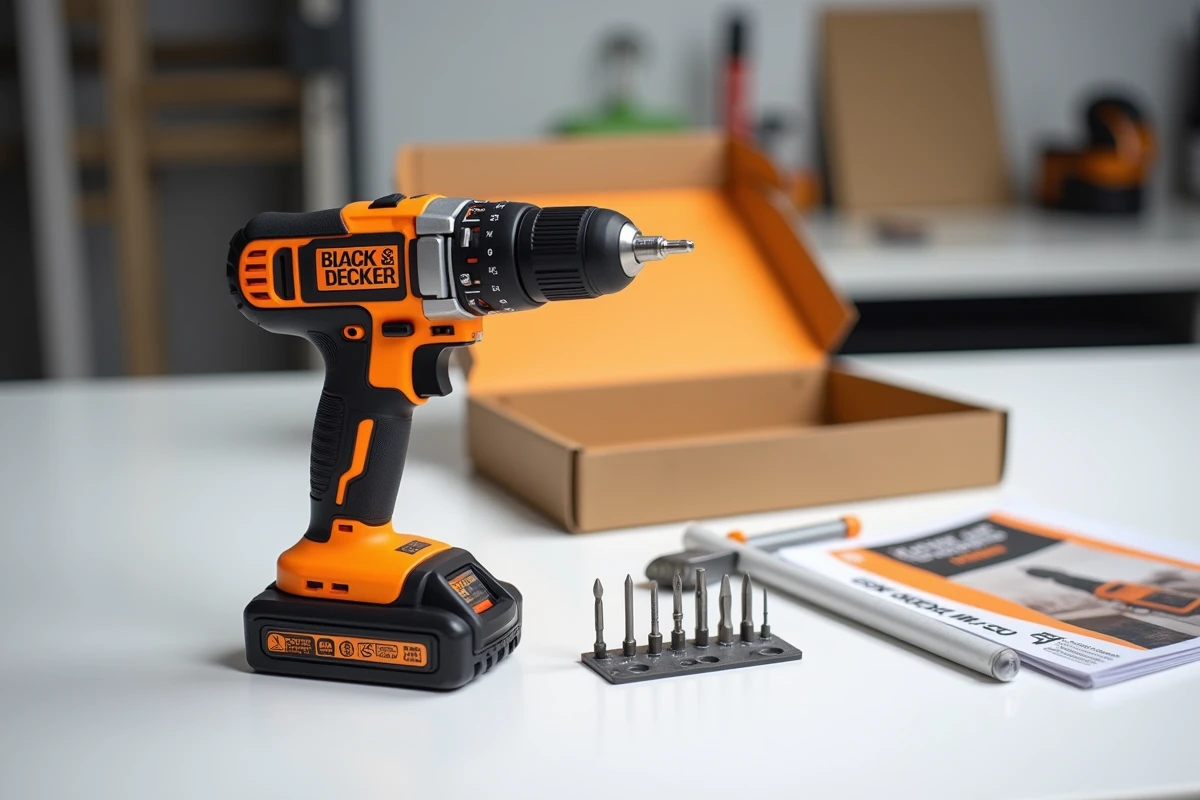
The 2 m cable length necessitates the almost systematic use of an extension cord. This seemingly trivial point impacts safety: a cable that is too short, pulled to the limit, can cause a sudden disconnection or hinder the cutting motion.
Is the CD601 still worth considering second-hand?
The real calculation depends on the price difference. In the second-hand market, the CD601 is traded at a fraction of the price of a new entry-level circular saw. For an occasional DIYer who cuts paneling, battens, or wainscoting a few times a year, the difference in power between 1100 W and 1300 W makes no difference to the result.
The CD601 remains relevant for light and occasional use, provided that one invests in a proper replacement blade and checks the mechanical condition before purchase. For regular work or cuts in thick hardwood, current saws with blade brakes and more powerful motors offer superior comfort and safety.
The decisive factor is not raw performance, but the availability of consumables. As long as carbon brushes and 170 mm blades with a 16 mm bore remain available, the machine retains its usability value. The day these parts disappear from catalogs, the CD601 will become a tool without future maintenance.