The bride and groom’s car is not just a means of transport between the town hall and the reception venue. It is a protocol in its own right, with seats assigned according to specific usage. Knowing who gets into the bride and groom’s car depends on the moment of the journey (going to the ceremony or leaving afterward) and the relationship between the passengers and the couple.
Safety and legal obligations in the bride and groom’s car
Wedding advice articles focus on symbolism and decoration but overlook a point that conditions the actual composition of passengers: road regulations. The safety rules that apply to any vehicle remain valid on the wedding day, even for a journey of just a few hundred meters.
The requirement for a certified car seat for young children prohibits putting a young child “just for the photo” in the bride and groom’s car if no suitable device is installed. A three-year-old honorary child cannot travel on their mother’s lap in a classic car without Isofix attachments.
This detail has very concrete consequences for the organization of the procession. If the couple wants their own children to be in their vehicle, they must provide an appropriate seat or choose a compatible vehicle. In the case of a vintage car or a luxury convertible, this is often impossible, and the children then travel in another vehicle of the procession.
The number of seats with seat belts also limits the number of authorized passengers. Even on the wedding day, an excess of passengers exposes the driver to a fine.
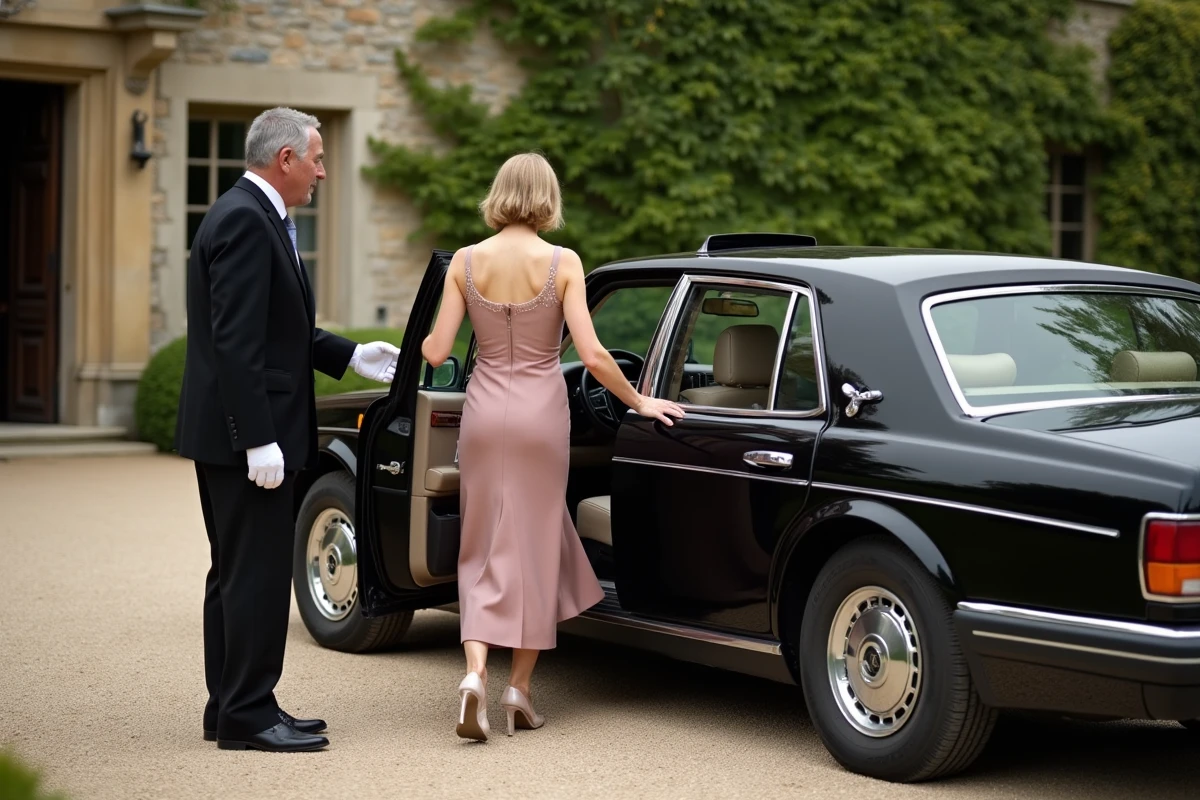
Journey to the ceremony: father of the bride and witnesses
The French tradition distinguishes two journeys. The first, which leads to the town hall or place of worship, follows a well-established custom. The question of who should get into the bride and groom’s car finds its most codified answer here.
The father of the bride drives or accompanies his daughter in the main car. This gesture extends the tradition of “giving away the bride,” where the father symbolically hands over his daughter to her future husband. The mother of the bride usually travels in a second vehicle with other close family members.
Meanwhile, the groom leaves his home or preparation venue in a separate car. He is typically accompanied by his mother or his best man. The two processions converge towards the ceremony venue.
Here is the traditional order of passengers for the outward journey:
- Bridal car: the bride and her father (or the person who “gives her away”), sometimes an honorary child if the vehicle allows
- Groom’s car: the groom and his mother, or the groom and his best man
- Following cars: remaining witnesses, parents from the opposite side, then close guests
Departure after the ceremony: the couple travels together
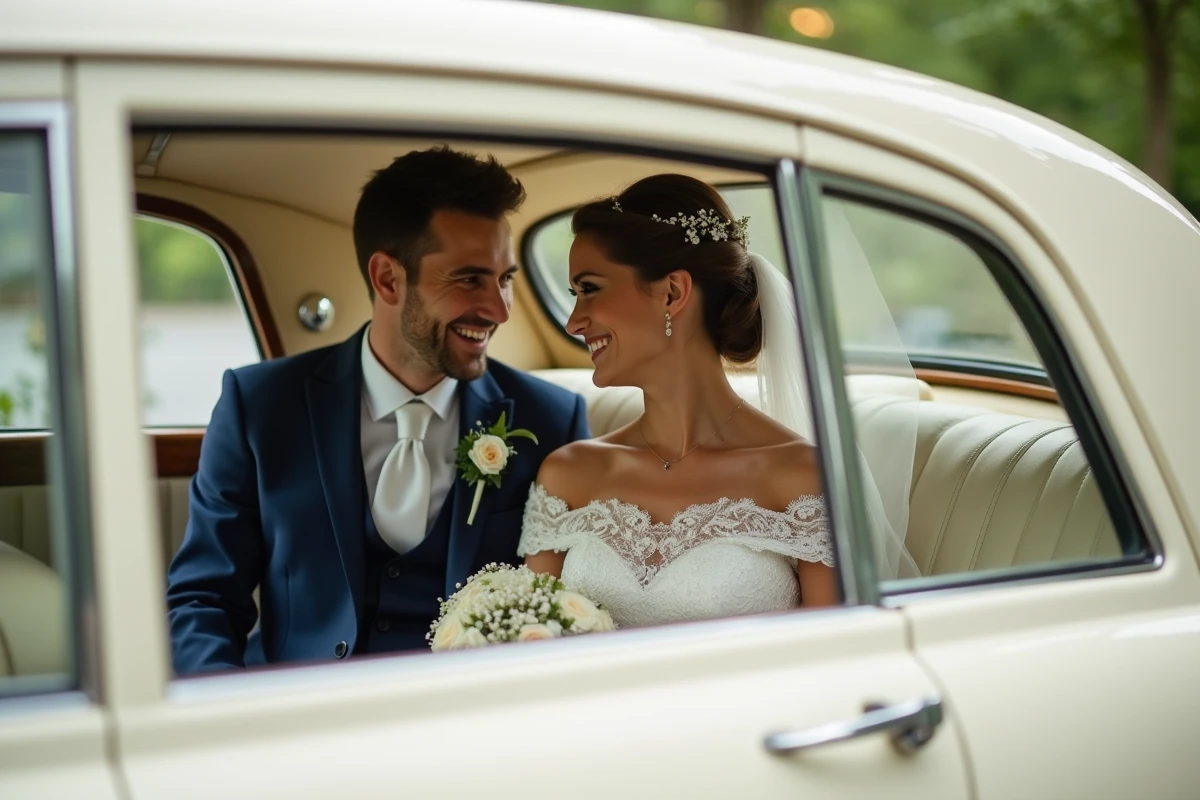
After the ceremony, the rule changes. The couple gets into the same car together, alone or with their driver. This is the symbolic moment when they officially form a couple and leave the ceremony venue side by side.
The father of the bride then reunites with the mother of the bride in another vehicle. The witnesses take their place in the car immediately following that of the couple, forming the head of the procession.
The order of the procession on the return is structured differently from the outward journey:
- First car: the couple, alone (this is the decorated vehicle, often flowered by the florist)
- Second car: the bride’s parents
- Third car: the groom’s parents
- Following cars: witnesses, close family, then guests
This scheme is not rigid. Many couples modify the order according to their family situation, especially in cases of blended families or absent parents.
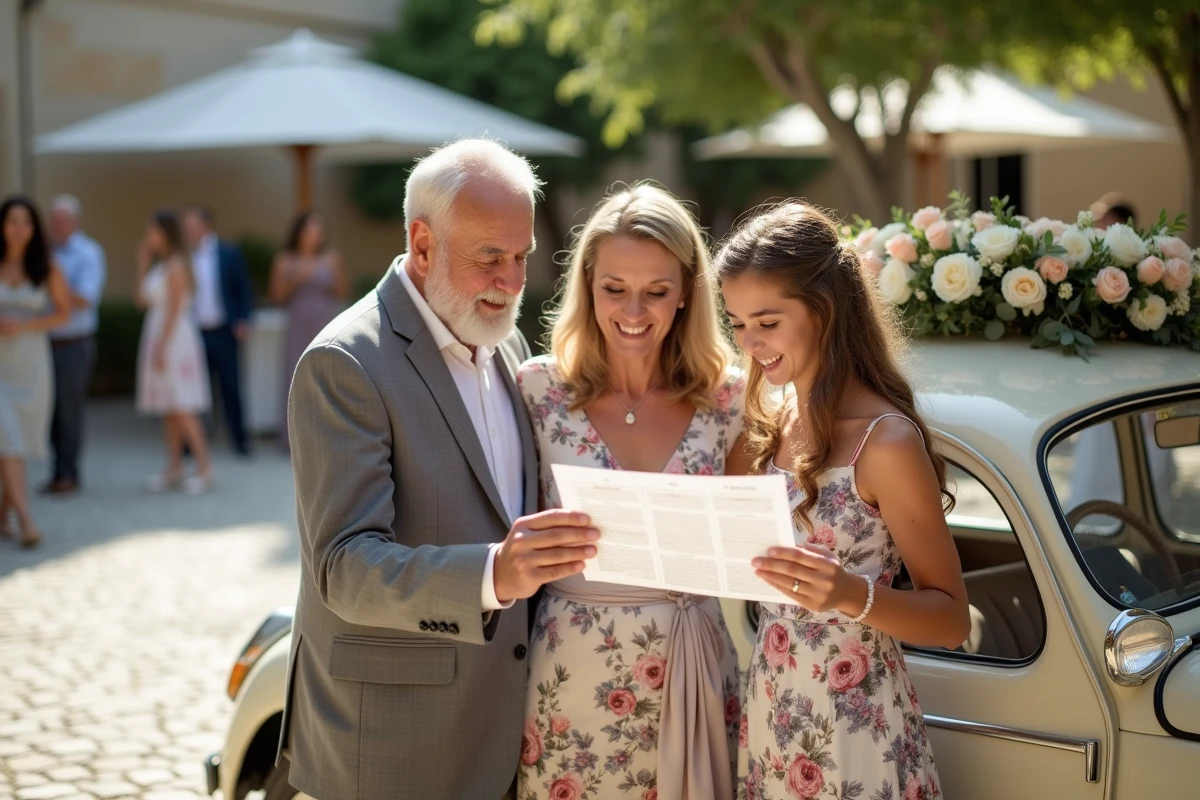
Adapting tradition to current family configurations
The tradition of the father accompanying the bride assumes a classic family configuration. When this is not the case, the choice of passenger becomes a personal decision, sometimes delicate.
A bride whose father has passed away or is absent may choose to be accompanied by her brother, grandfather, mother, or a close friend. No protocol rule mandates a man in this position. The accompanying person is the one the bride considers most significant in her journey.
In same-sex weddings, the question arises differently since there is no predefined gender distribution. Each partner organizes their own outward journey with the person of their choice, and both meet in the same car after the ceremony.
Reduced procession and responsible mobility
Transport providers have been offering soft mobility options for weddings for a few years: collective shuttles, shared VTCs, minibuses for guests. This trend directly modifies the composition of the procession.
When the motorized procession is reduced to two or three vehicles instead of ten, the bride and groom’s car often becomes the only “symbolic” vehicle. Parents and witnesses travel together in a shuttle, and only the couple occupies the decorated car. The result simplifies the protocol question while reducing logistics.
This choice involves planning guest transport in advance to avoid delays between the ceremony and reception. A transport plan shared a few days before the wedding allows for the distribution of passengers without improvisation on the day itself.
The decoration of the vehicle, whether it involves flowers on the hood or ribbons matching the wedding colors, remains reserved for the bride and groom’s car. Other vehicles in the procession traditionally bear a simple ribbon or a tulle bow to signal their belonging to the procession.